
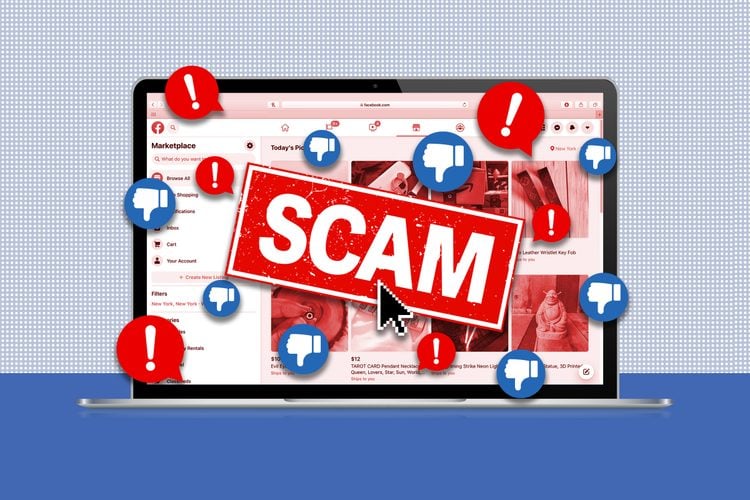
I recently came across a scam on Facebook Marketplace that was honestly more convincing than I expected. I did not personally lose money, but I almost felt for a similar listing myself, which made me take a closer look at how these scams actually work. It surprised me how normal everything looked at first.
What scammers usually do is post an item at a price that’s slightly lower than market value, just enough to attract attention but not low enough to seem suspicious. For example, things like an iPhone, a laptop, or a gaming console. When you message them, they respond quickly and politely, often giving a believable reason for selling, such as moving, upgrading, or needing money urgently.
In many cases, they try to move the conversation off Facebook Marketplace and onto the next messages on another app. This is where the scam becomes more dangerous. They will usually ask for a deposit to ‘hold’ the item, claiming that other buyers are interested and you need to act fast. This creates pressure and urgency, which makes people less likely to think critically.
After payment is sent, the scammer either disappears, blocks the buyer, or deletes the account entirely. In most cases, the product never actually exists. The photos are often stolen from real listings or websites, and the same item may even be ‘sold’ to multiple people at the same time.
The main purpose of this scam is to make quick money by exploiting trust and urgency. Instead of relying on complex hacking or technology, scammers rely on human behaviours, especially the fear of missing out on a good deal.
This type of scam works so well because everything looks normal at the beginning. The listing appears real, the conversation feels natural, and nothing seems obviously fake. However, some patterns become clear once you know what to look for. For example. Scammers often avoid meeting in person, refuse cash payments, and insist on digital payment methods like Venmo, Zelle, or Cash App, which are difficult to reverse.
Looking back, there are several ways I could have identified and avoided this kind of scam. First, never send money or deposits before physically seeing the item. Secondly, always check the seller’s profile; new accounts or accounts with very little activity are a major red flag. Thirdly, reverse image searching the product photos can reveal whether they were stolen from somewhere else. Finally, any situation that creates pressure or urgency should be treated carefully, because scamers rely heavily on rushed decisions.
Overall, this experience made me realize how easy it is to get tricked online when something looks like a ‘good deal’. Understanding how these scams work is important not only for protecting yourself, but also for helping others avoid making the same mistake.
Welcome to UNR, Serena!!!
Hi, I hope I will have wonderful time in UNR.
Welcome to the States
You too!
Welcome to unr
Hi, great to see you.
Welcome to unr!
Nice to meet you!!!